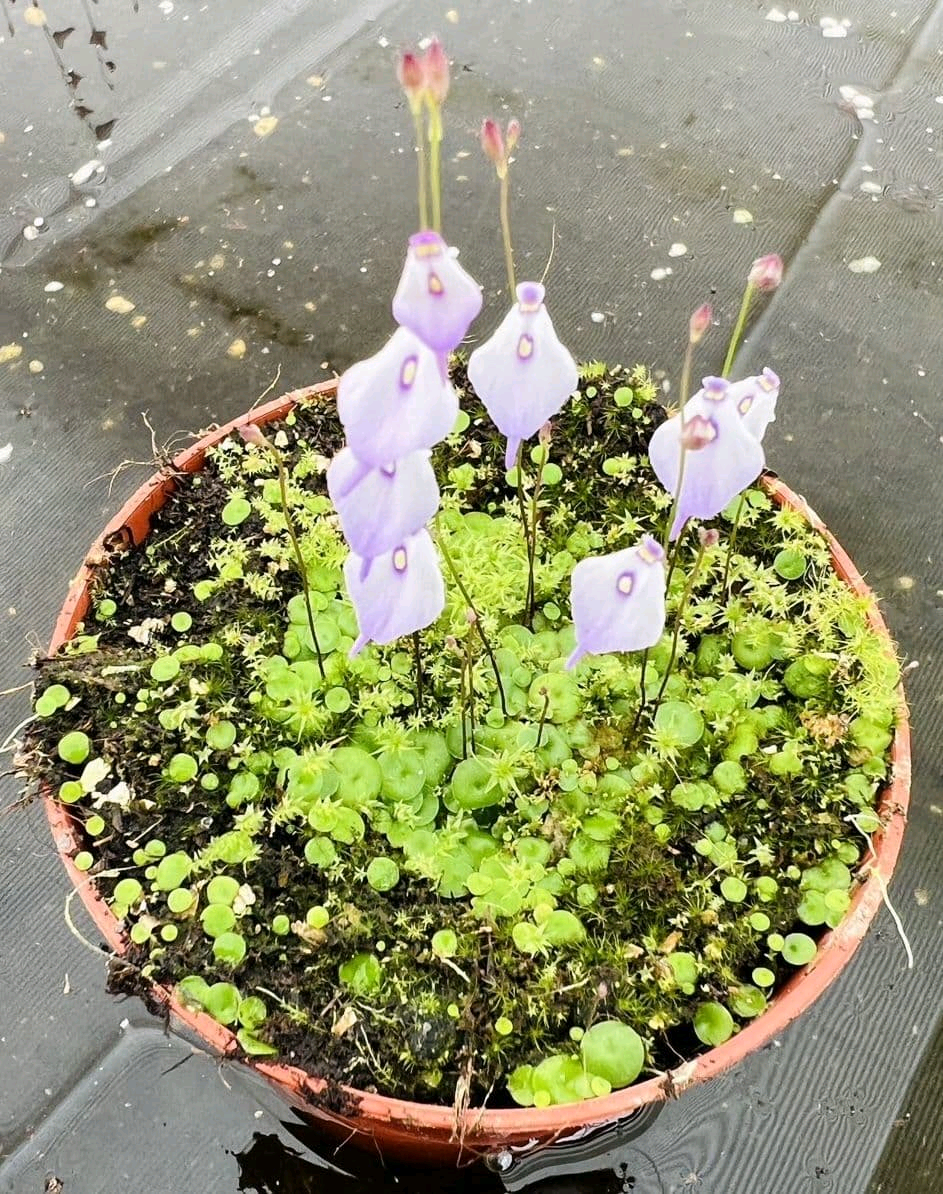
Utricularia pubescens is a small to medium-sized, probably annual, terrestrial or lithophytic carnivorous plant in the genus Utricularia. It is the sole member of the section Lloydia, as defined by Peter Taylor in 1986.
Distribution and Habitat
U. pubescens has an exceptionally wide native range. It is found in: - India - Tropical Africa - Central and South America
The species typically grows in boggy grasslands and damp, peaty soils, often in terrestrial or lithophytic settings. It can be found from sea level up to 1,900 meters (6,234 feet) in elevation.
Taxonomy
Utricularia pubescens was first described by James Edward Smith in 1819. Owing to its distinct morphology, Peter Taylor assigned it to its own section, Lloydia, in his 1986 taxonomic monograph on the genus.
Diagnostic Features
This species is noted for having small, peltate leaves—a unique and distinguishing feature within the genus Utricularia.
Synonyms
Due to its wide distribution and morphological variability, U. pubescens has been described under numerous synonyms over time, including:
- U. capensis Kamieński
- U. connellii N.E. Br.
- U. deightonii F.E. Lloyd & G. Taylor
- U. fernaldiana F.E. Lloyd & G. Taylor
- U. firmula Hutch. & Dalziel
- U. graniticola A. Chev. & Pellegr.
- U. hydrocotyloides F.E. Lloyd & G. Taylor
- U. nivea Afzel. ex Kamieński
- U. papillosa Stapf
- U. pauciflora Afzel. ex Kamieński
- U. peltata Spruce ex Oliv.
- U. peltatifolia A. Chev. & Pellegr.
- U. puberula Benj.
- U. regnellii Sylvén
- U. sciaphila Tutin
- U. subpeltata Steyerm.
- U. thomasii F.E. Lloyd & G. Taylor
- U. venezuelana Steyerm.