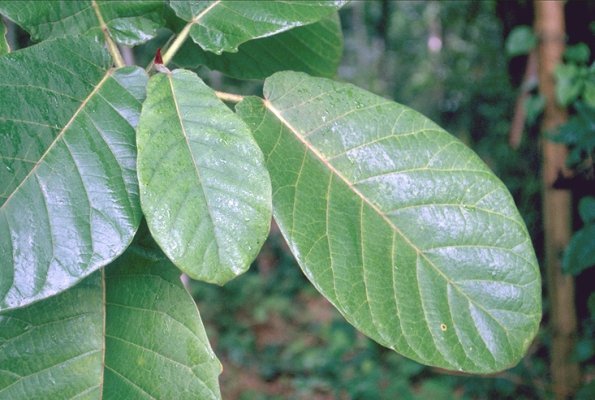
Ficus vogeliana
Ficus vogeliana is a fig species in the family Moraceae that produces flagelliform infructescences (also called stolon-panicles) found at or just beneath the soil surface.
When the figs (syconia) are subsurface, the method of pollination remains unclear.
Its outer bark is typically greyish, while the slash (cut bark) is reddish.
Description
- Size: Medium to large tree, reaching 20 m in height with buttressed roots
- Leaf Arrangement: Spirally arranged leaves with persistent stipules up to 2 cm long
- Petiole: Up to 5 cm long and 3 mm thick
- Leaf Surface: Upper surface scabrous (rough)
- Leaf Blade: Elliptical to oblong, up to 22 cm long and 11 cm wide, with:
- Apex: Acuminate
- Base: Cordate
- Fruit: Figs borne on branches at the base of the trunk
Distribution and Habitat
- Range: From Liberia (West Africa) eastwards to the Central African Republic and southwards to Angola
- Habitat: Seasonally flooded environments, swamp forests, and evergreen forests
Uses
Wood and Carpentry
- Trunk used in canoe making in Sierra Leone
- Wood useful for general carpentry work
Traditional Medicine (Gabon – Fang people)
- Bark decoction: Drunk as an emetic
- Bark extract decoction: Used in the treatment of stomach cancer
- Leaf decoction: Used to induce vomiting