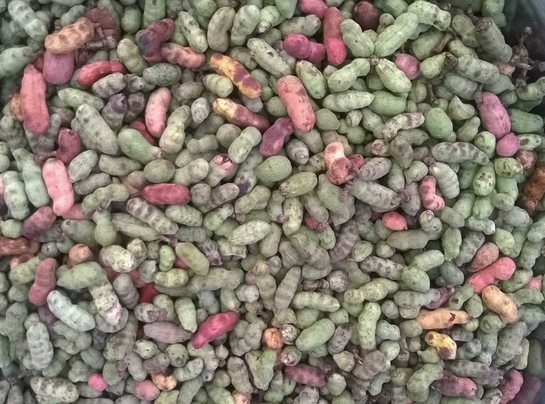
Dennettia
Dennettia is a monotypic genus (i.e., a genus containing a single species) of plants in the custard apple family Annonaceae.
The sole included species is Dennettia tripetala, a shrub or tree native to western and west-central tropical Africa, including Guinea, Sierra Leone, Ghana, Nigeria, and Cameroon.
It is threatened by habitat loss.
Nomenclature
Dennettia tripetala is known colloquially in English as pepper fruit.
Local names include:
- mmimmi – Igbo
- ata igebere or igberi – Yoruba
- imako – Niger Delta and Urhobo
- ako – Benin
- nkarika – Efik
Description
- Pepper fruit consists of three broad green sepals and golden fleshy petals.
- The oblong-shaped leaves alternate and taper at the tip.
Uses
- Leaves can be dried and stored for long periods without microbial growth.
- Fruits are used as food and herbal medicine.
- Roots, leaves, and fruits are all used in traditional medicine preparations.
Food
Pepper fruit contains essential oils and volatile oils, which contribute to its flavor, aroma, and pungency.
Common in eastern Nigeria, it is served with palm wine, garden eggs, bitter kola, and kola nuts during:
- Festivals
- Coronations
- Traditional weddings
- Naming ceremonies
- New yam festivals
Flavor Profile:
- Extremely peppery when chewed (Keay, 1989).
- Stimulating sensation after consumption.
Culinary Uses:
- Seasoning for white soup, spicy fish, meats, vegetables, stews, sauces, and sausages.
- Ingredient in hot drinks, alcoholic beverages, and zobo drinks (can replace ginger in zobo preparation).
Nutritional Value
(Okwu & Morah, 2004 study) – composition of D. tripetala:
- 0.42% magnesium
- 1.80% calcium
- 2.50% potassium
- 9.84% crude fibers
- 15.31% crude protein
- 8.0% moisture
- 62% carbohydrate
- 3.47% crude lipids
- 0.33% phosphorus
- Trace amounts of cadmium, iron, zinc, copper
- Water-soluble vitamins: niacin, ascorbic acid, riboflavin, thiamine
Medicinal
Pepper fruit is widely used in West African traditional remedies.
Research-backed health claims include:
- Postnatal Care – Helps uterine contraction after childbirth (Achinewhu et al., 1995).
- Bactericidal & Bacteriostatic – Inhibits bacterial growth (Ogbonna et al., 2013).
- Anti-inflammatory & Analgesic – Essential oil reduces pain and inflammation (Oyemitan et al.).
- Antimicrobial – Active against various pathogens (Aderogba et al.).
- Anti-ulcer – Ethanol seed extract protects against ulcers (Anosike et al., 2016).
- Glaucoma Management – May lower intraocular pressure (Timothy & Okere).
Insecticide
Akinbuluma et al. (2015) found pepper fruit effective as a natural pesticide.
- Works against Sitophilus zeamais (maize weevil) and other pests.
- Pungency and peppery compounds contribute to its insecticidal properties.