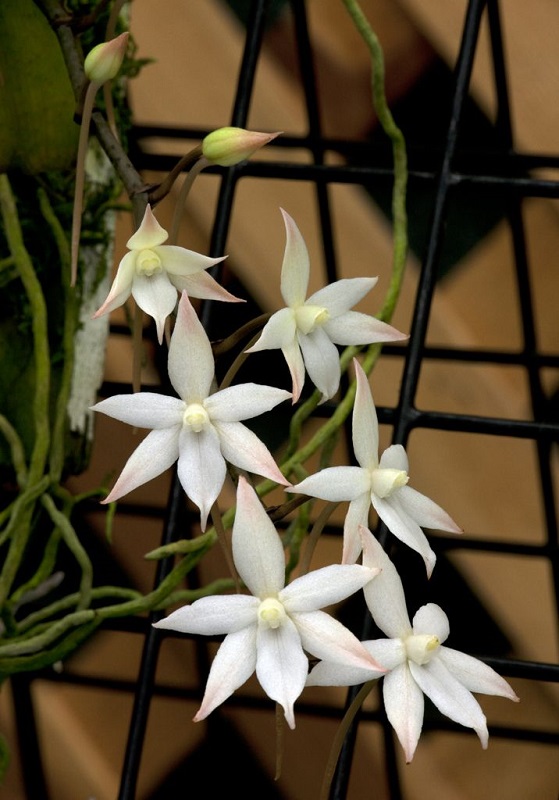
Aerangis biloba
Aerangis biloba is a species of epiphytic orchid in the genus Aerangis and the family Orchidaceae. It is known for its fragrant, star-shaped white flowers and is popular among orchid enthusiasts for its compact growth and ease of cultivation.
Description
Aerangis biloba is a monopodial epiphyte with elongated, dark green leaves that feature a distinctive mix of reticulate and parallel veining, giving them an attractive appearance. The plant is compact and slow-growing, typically reaching a mature size suitable for small growing spaces. Its inflorescence produces multiple fragrant white flowers with a musky floral scent, often blooming in spikes. The flowers are star-shaped and contribute to its appeal as an ornamental plant. The species name "biloba" refers to the two-lobed structure of certain floral parts.
Distribution and Habitat
Native to tropical western and central Africa, Aerangis biloba is found in lowland forests, woodlands, and thickets, as well as on cultivated crops such as coffee and cocoa. It grows as an epiphyte on tree branches at elevations up to 700 meters. Its range includes the following countries: Benin, Ghana, Guinea-Bissau, Guinea, Ivory Coast, Liberia, Nigeria, Senegal, Sierra Leone, Togo, Central African Republic, Cameroon, and Gabon. The species thrives in warm, humid environments with dappled light and good air circulation.
Cultivation
Aerangis biloba is considered adaptable and relatively easy to grow for an African orchid species. It prefers intermediate to warm temperatures, with daytime highs of 80–85°F (27–29°C) and nighttime lows of 62–68°F (17–20°C). High humidity (around 80%) and bright, indirect light are ideal, avoiding direct sunlight to prevent leaf burn. Watering should follow a fast wet-dry cycle: thorough watering during active growth (nearly daily in humid conditions) and reduced to once a week in cooler, drier periods. Use a loose, well-draining medium such as a mix of bark and perlite, or mount on slabs with sphagnum moss for optimal root health. Fertilize sparingly with a balanced orchid fertilizer after watering, diluting to half strength during the growing season.
Propagation is typically by division of mature plants, with new cuttings benefiting from high humidity and rooting hormone. It is hardy enough to tolerate brief periods of neglect, such as a week without water. Cultivars like 'Wössen', 'Titan III', and 'Senegal Spectacle' have received awards from the American Orchid Society for their exceptional form and vigor.
References
- Schlechter, F.R.R. (1915). "Contributions to our knowledge of the orchids of German West Africa". English Botany. 39: 1–36.
- Cribb, P. (1989). "Aerangis gracillima: a definitive account". Lindleyana. 4(1): 23–29.
- Chiron, G.; La Croix, I.; Stewart, J. (1998). "Two new species of Aerangis from tropical Africa". Orchid Review. 106(1222): 225–229.